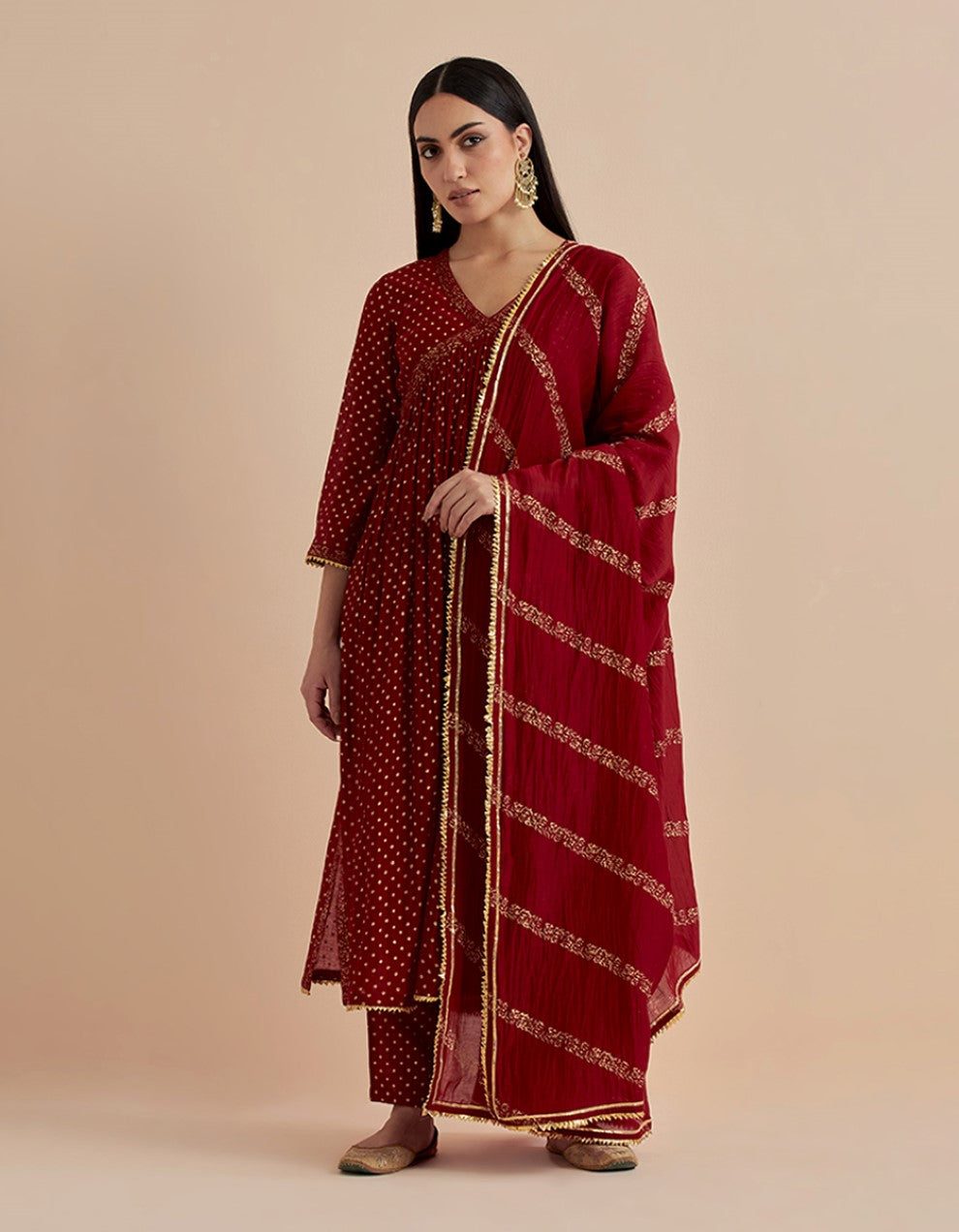
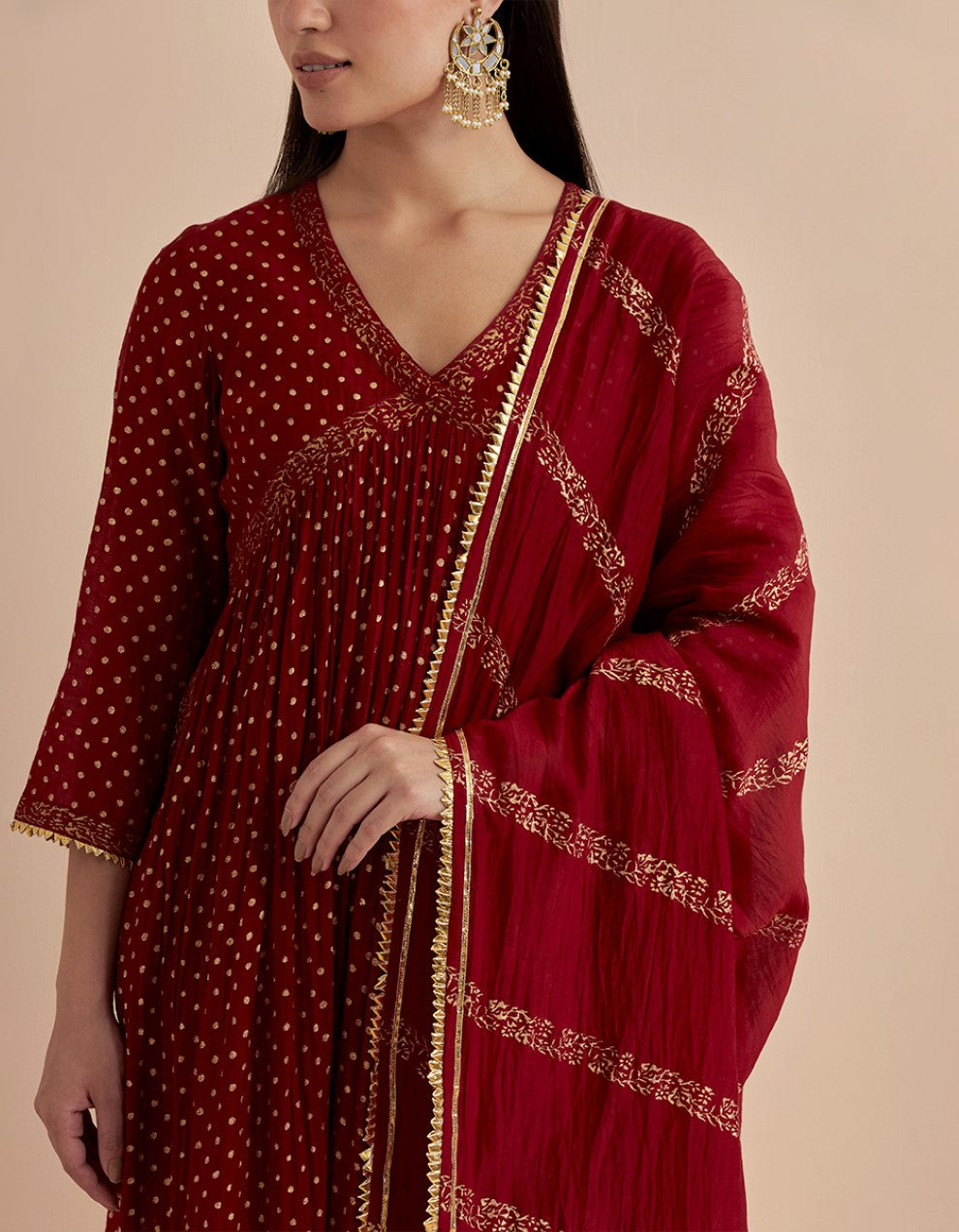
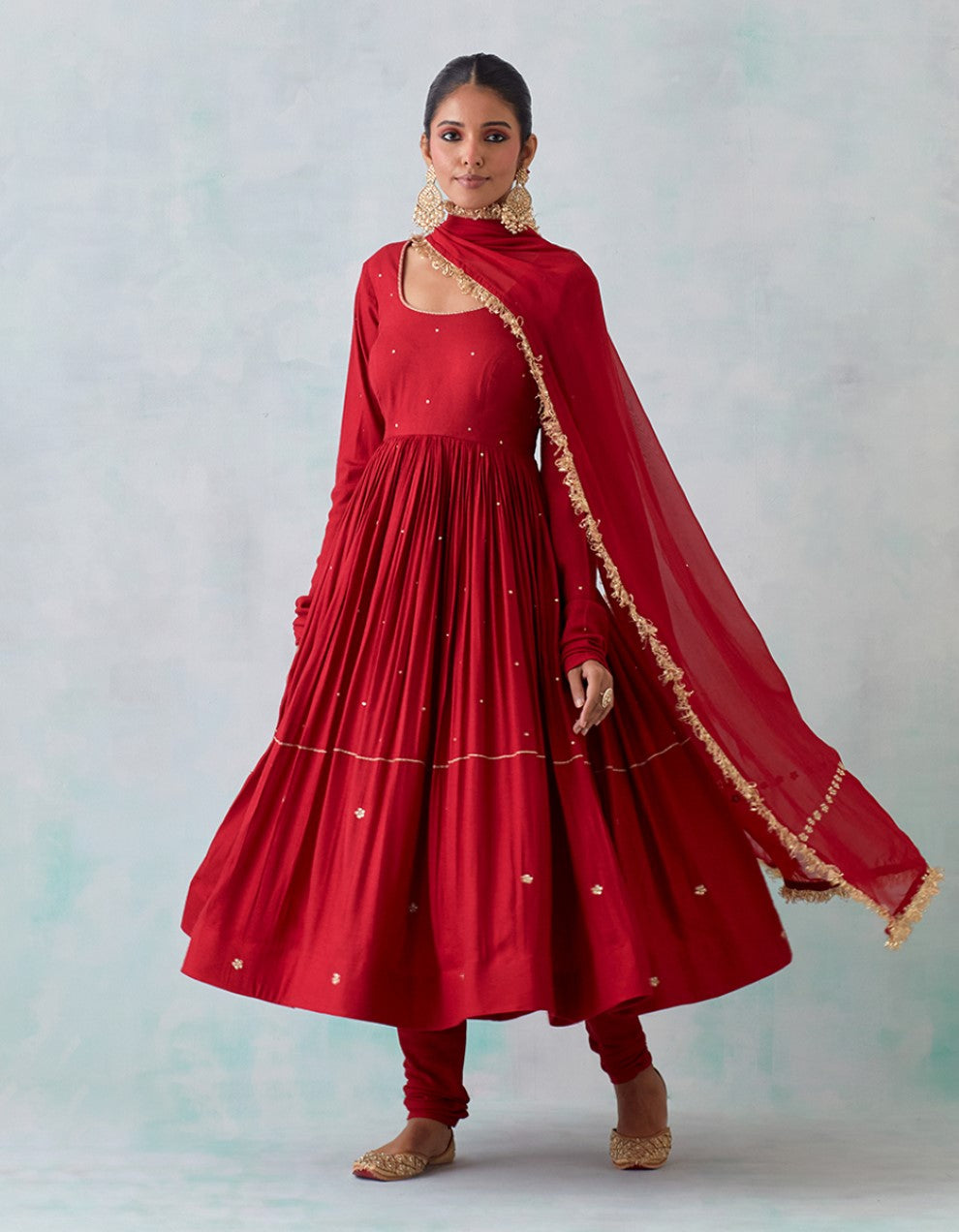
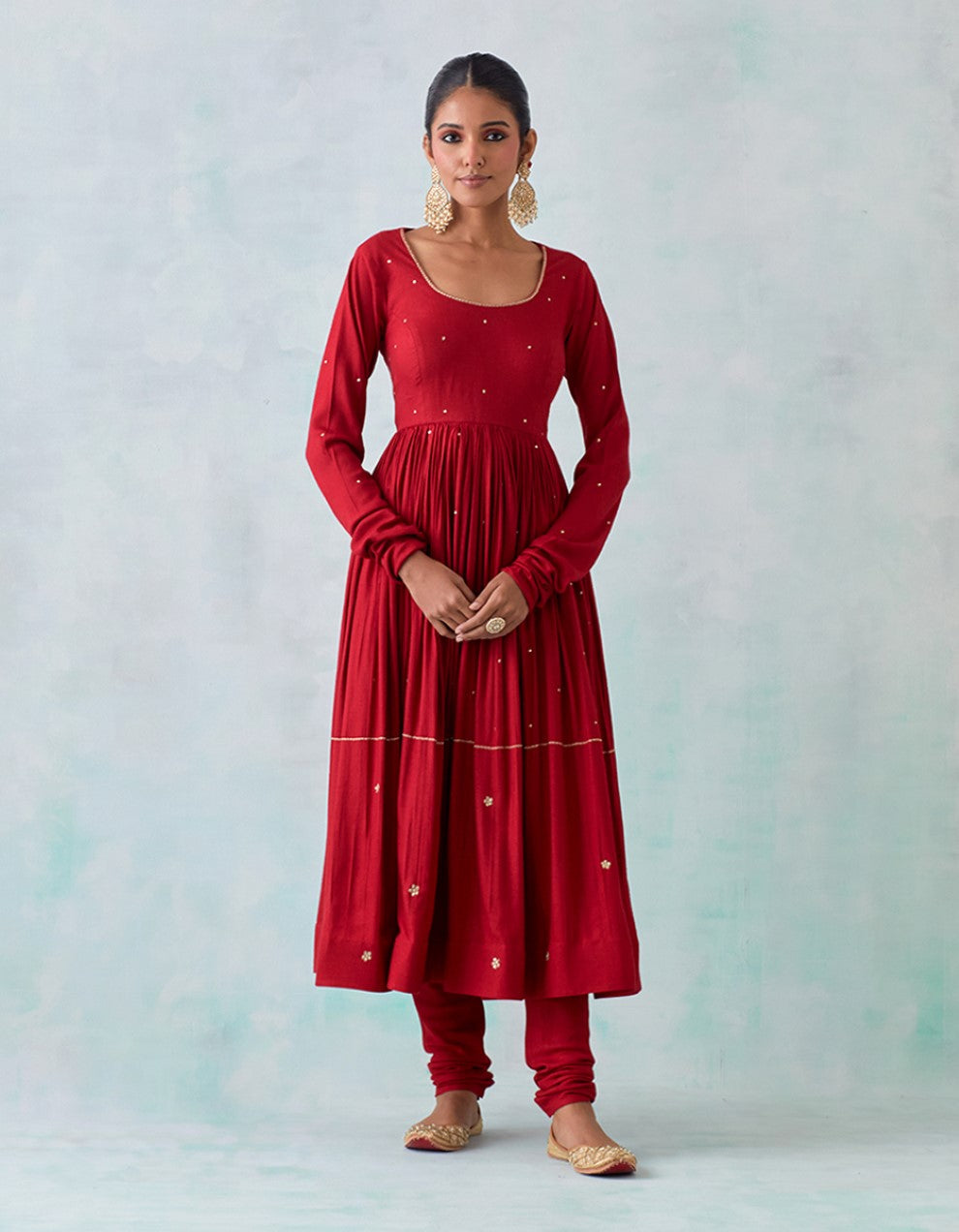
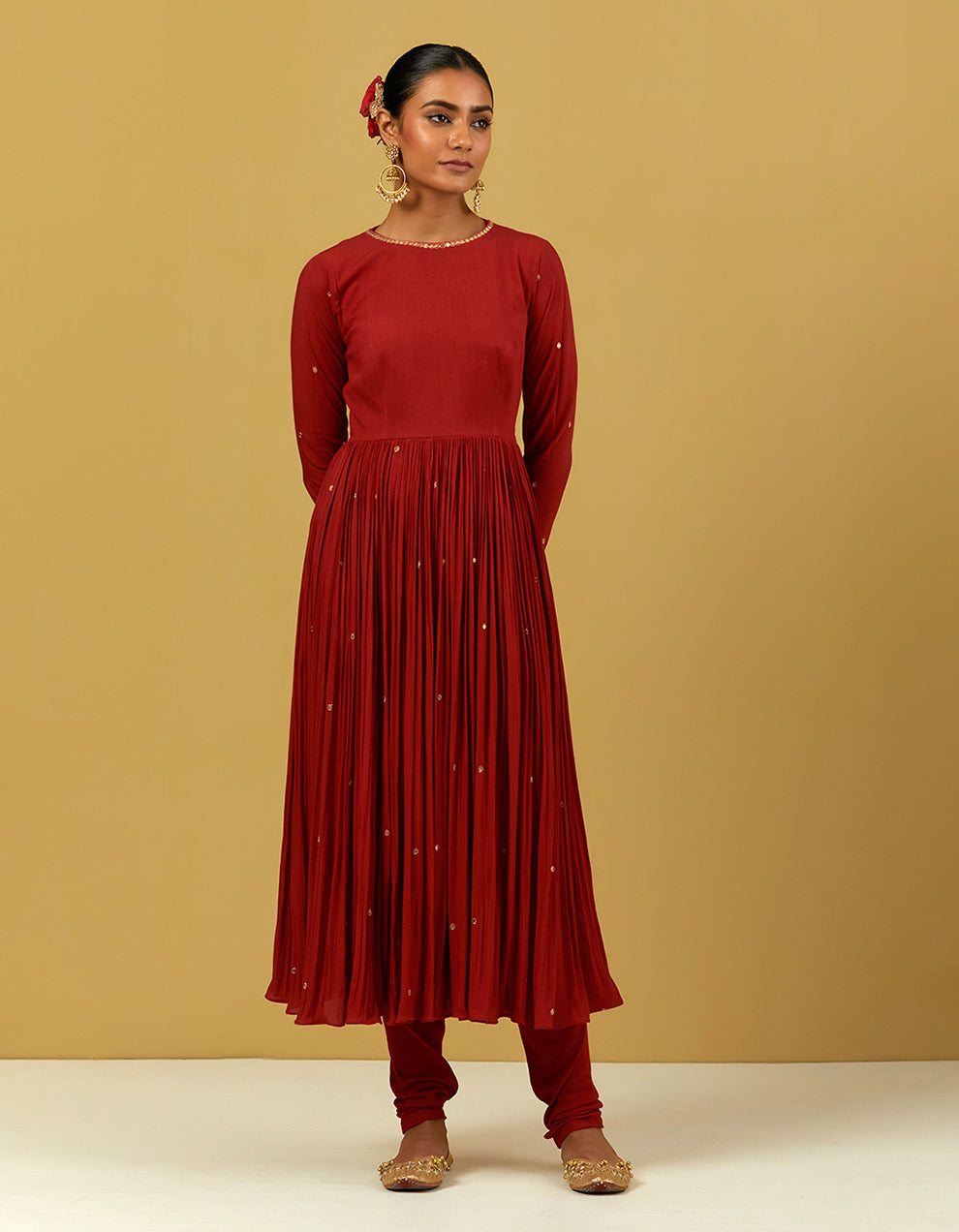
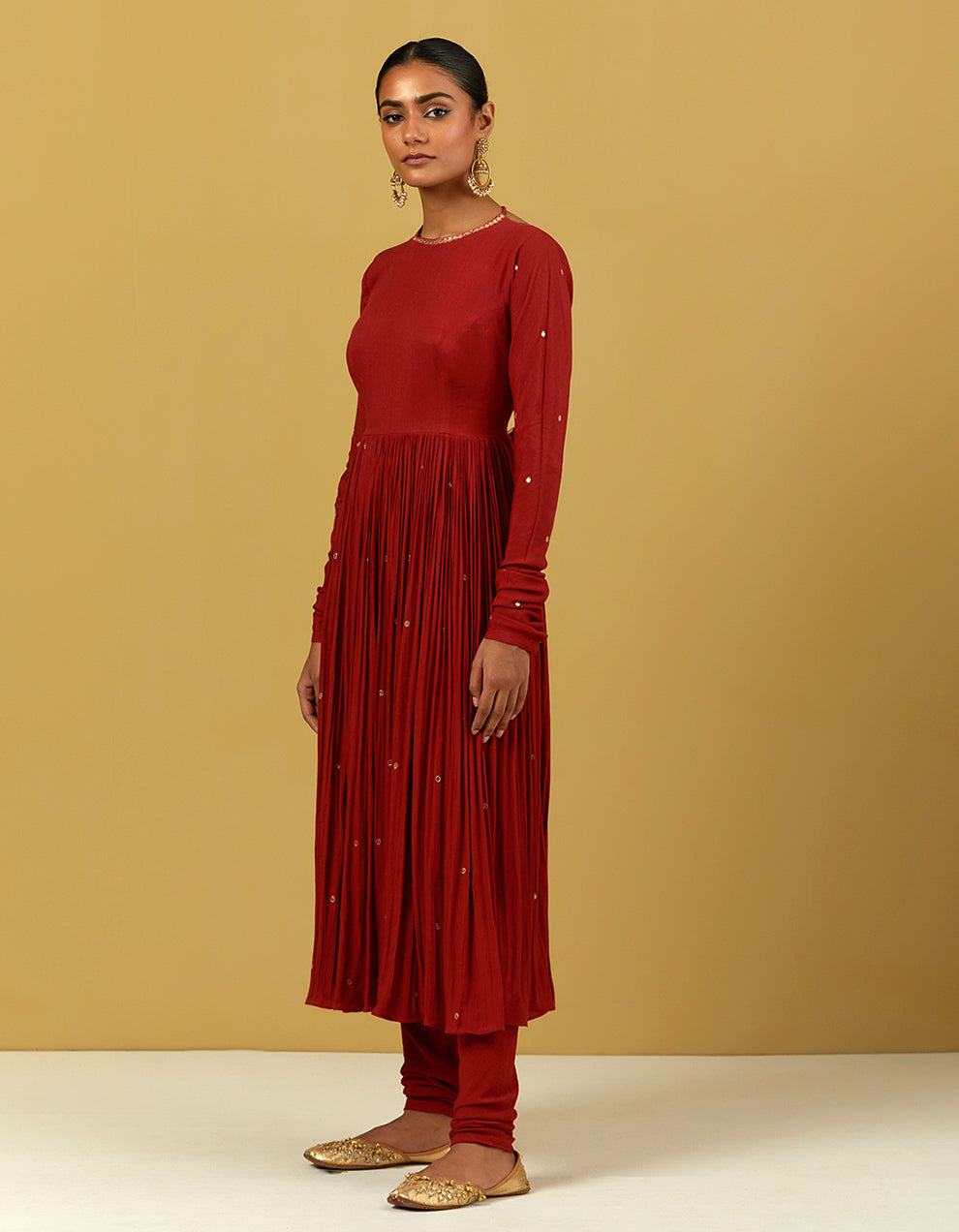
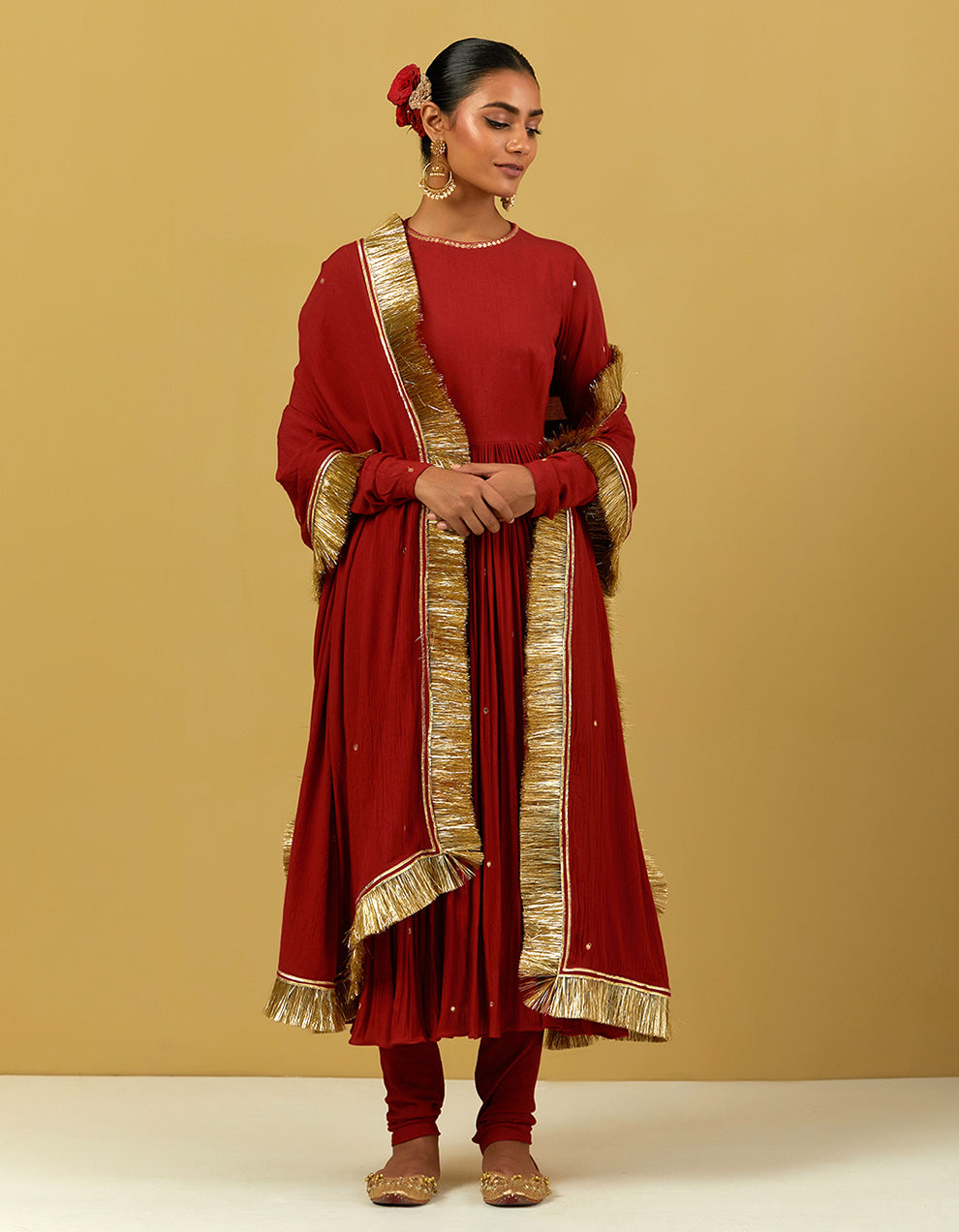
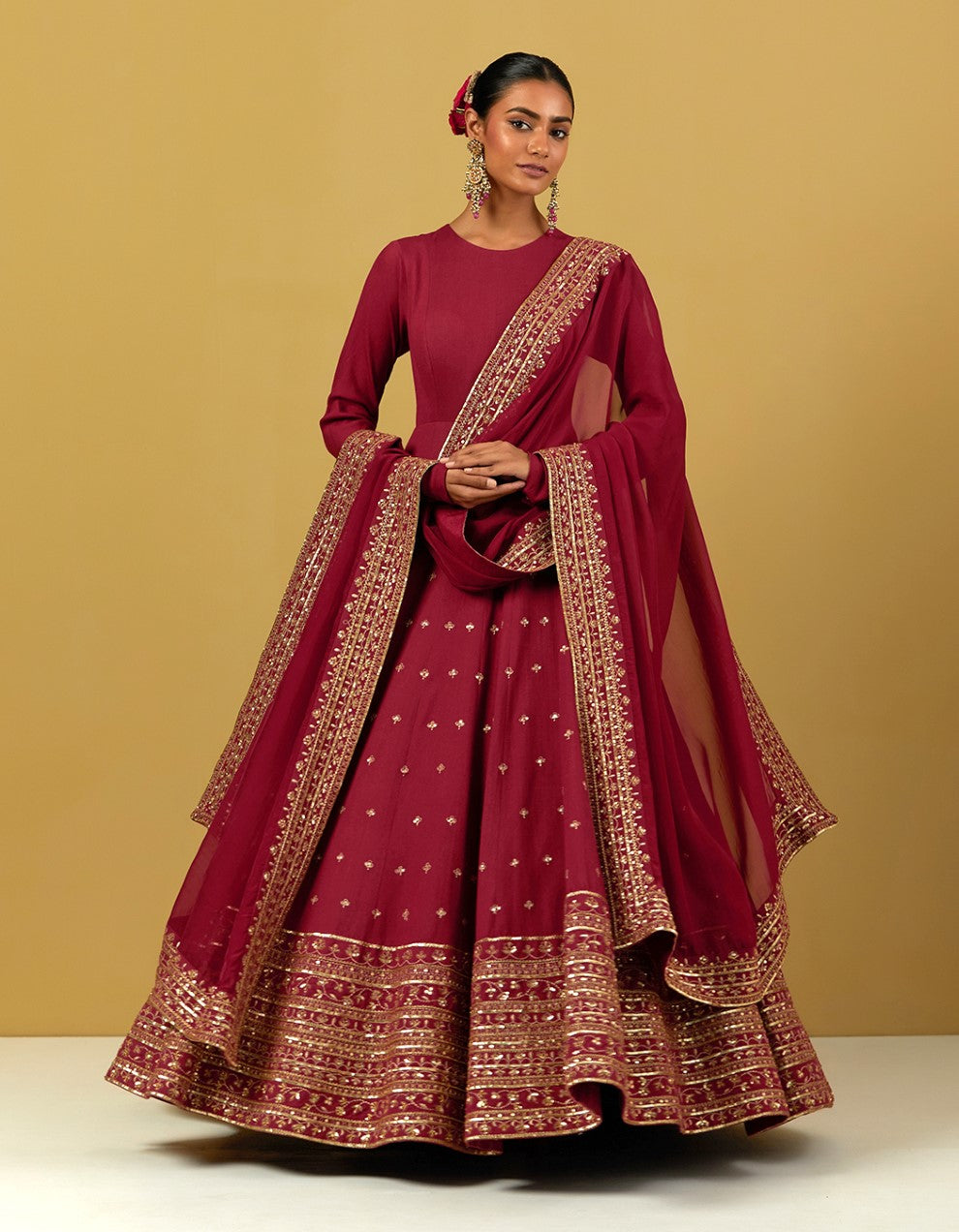
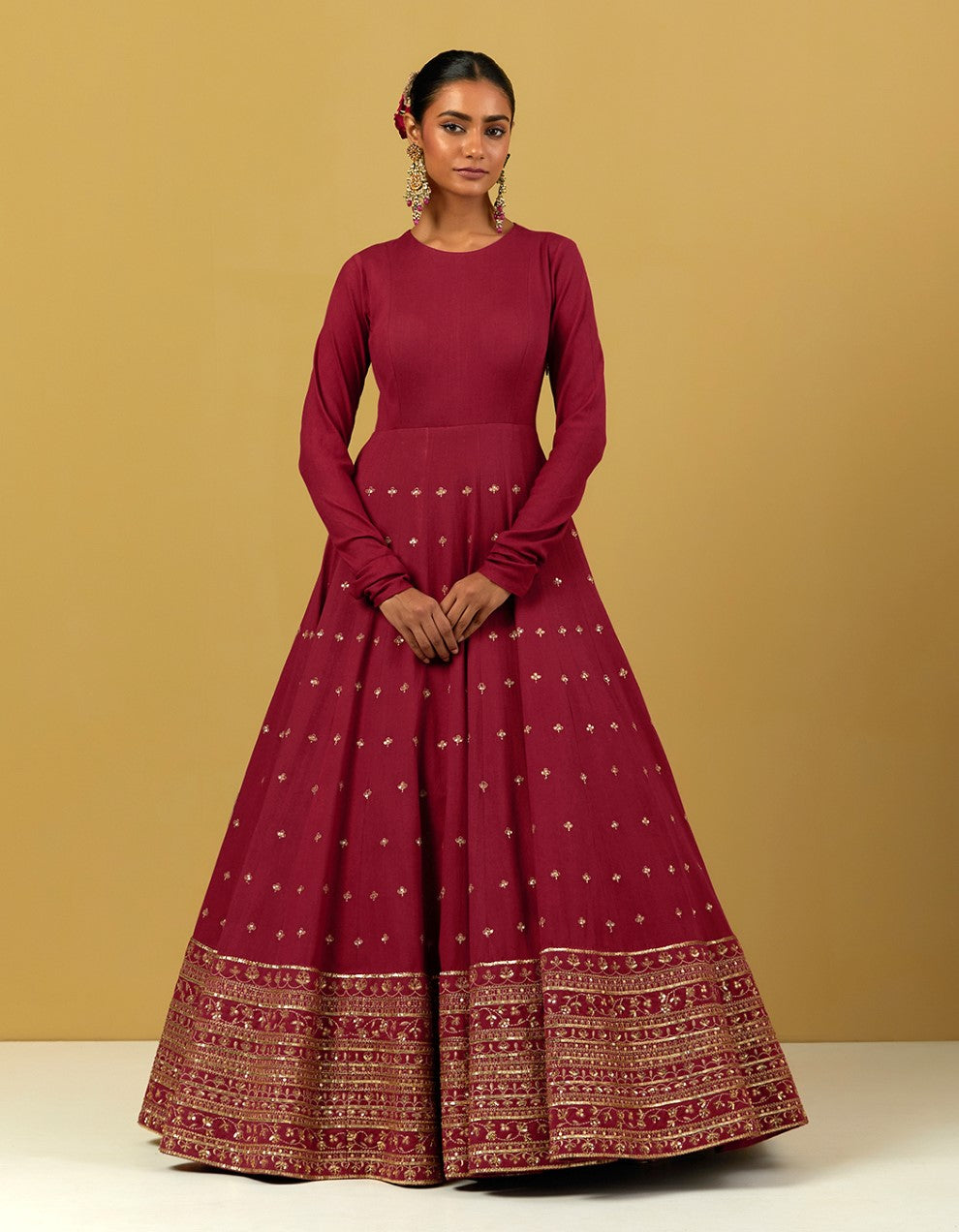
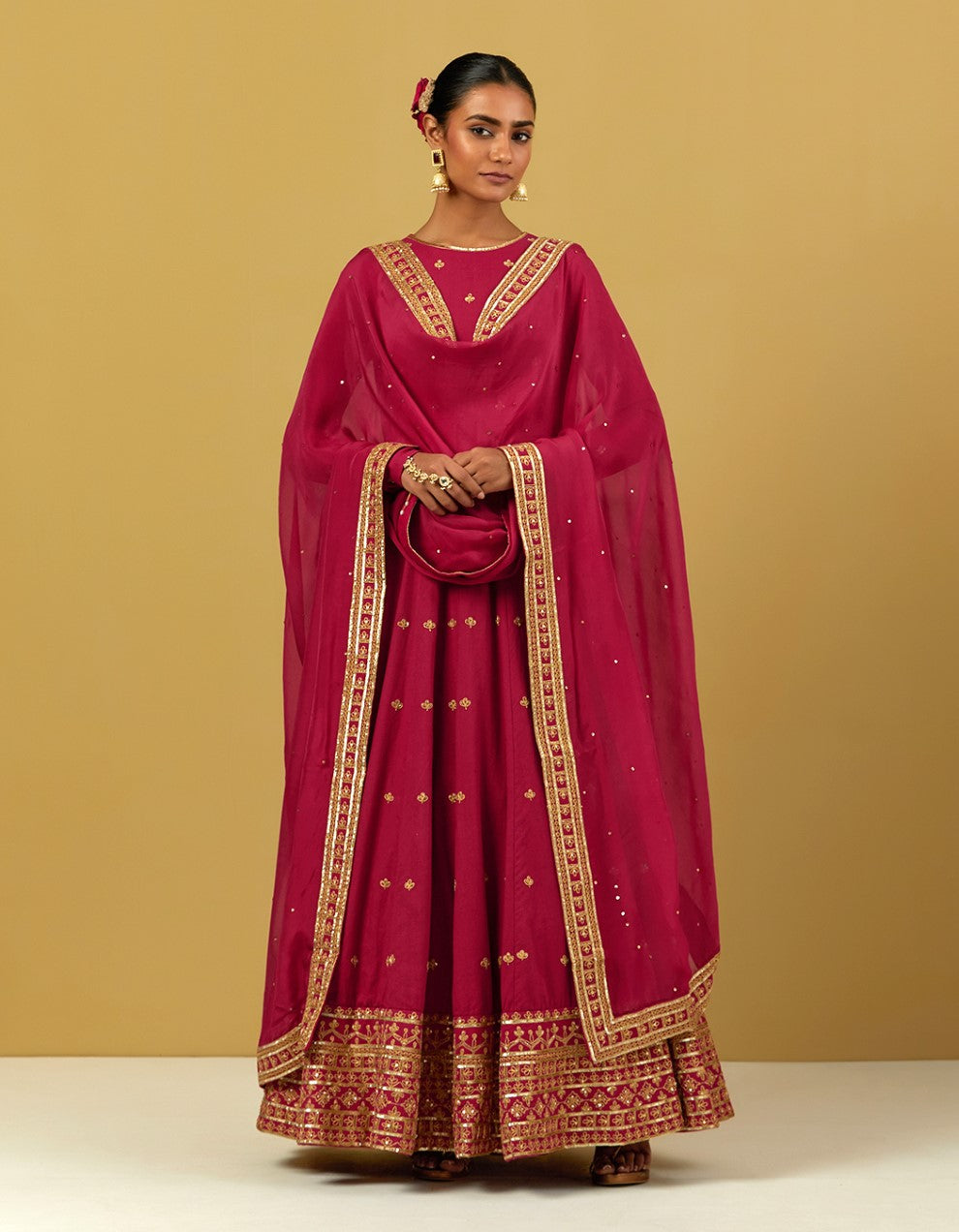
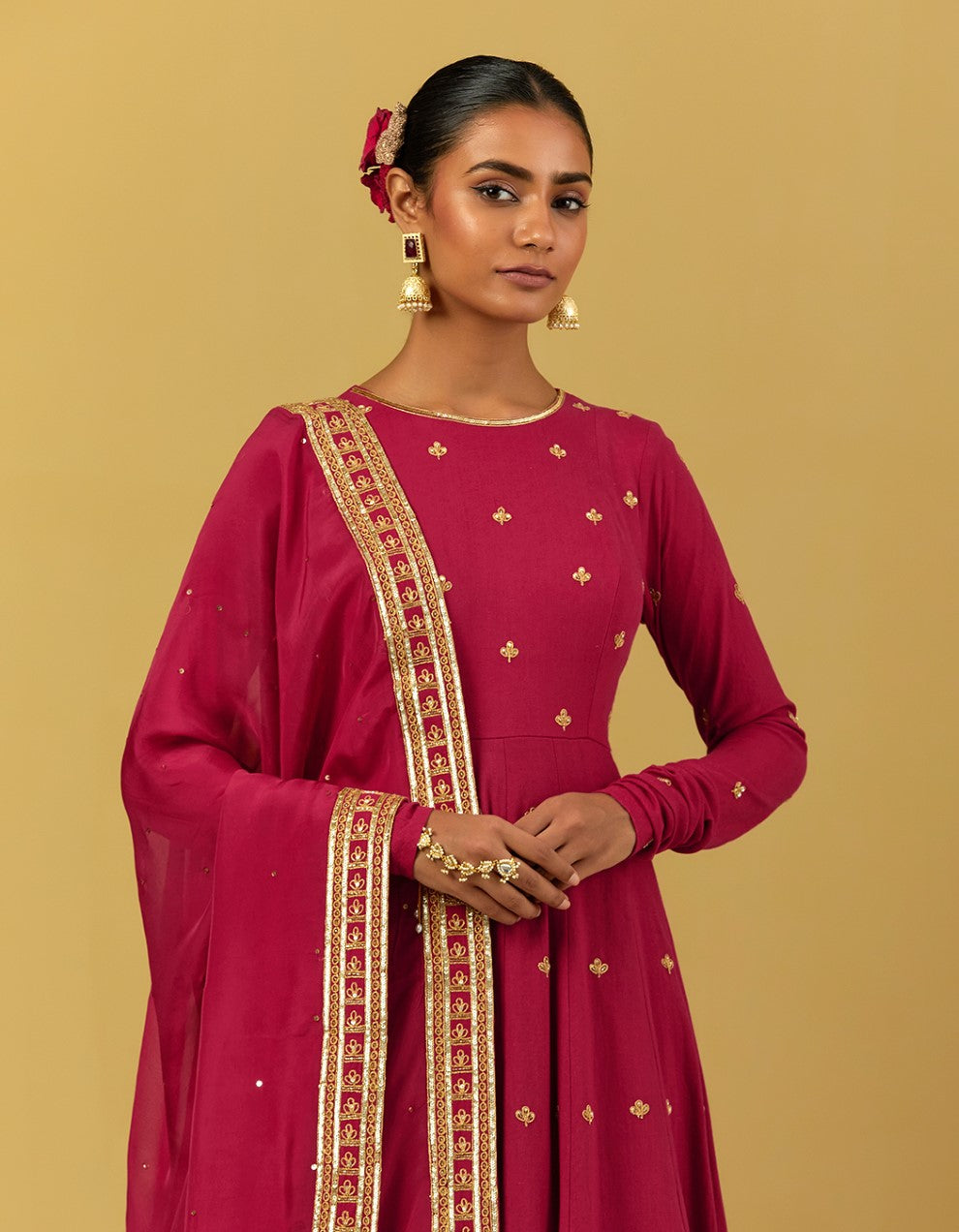
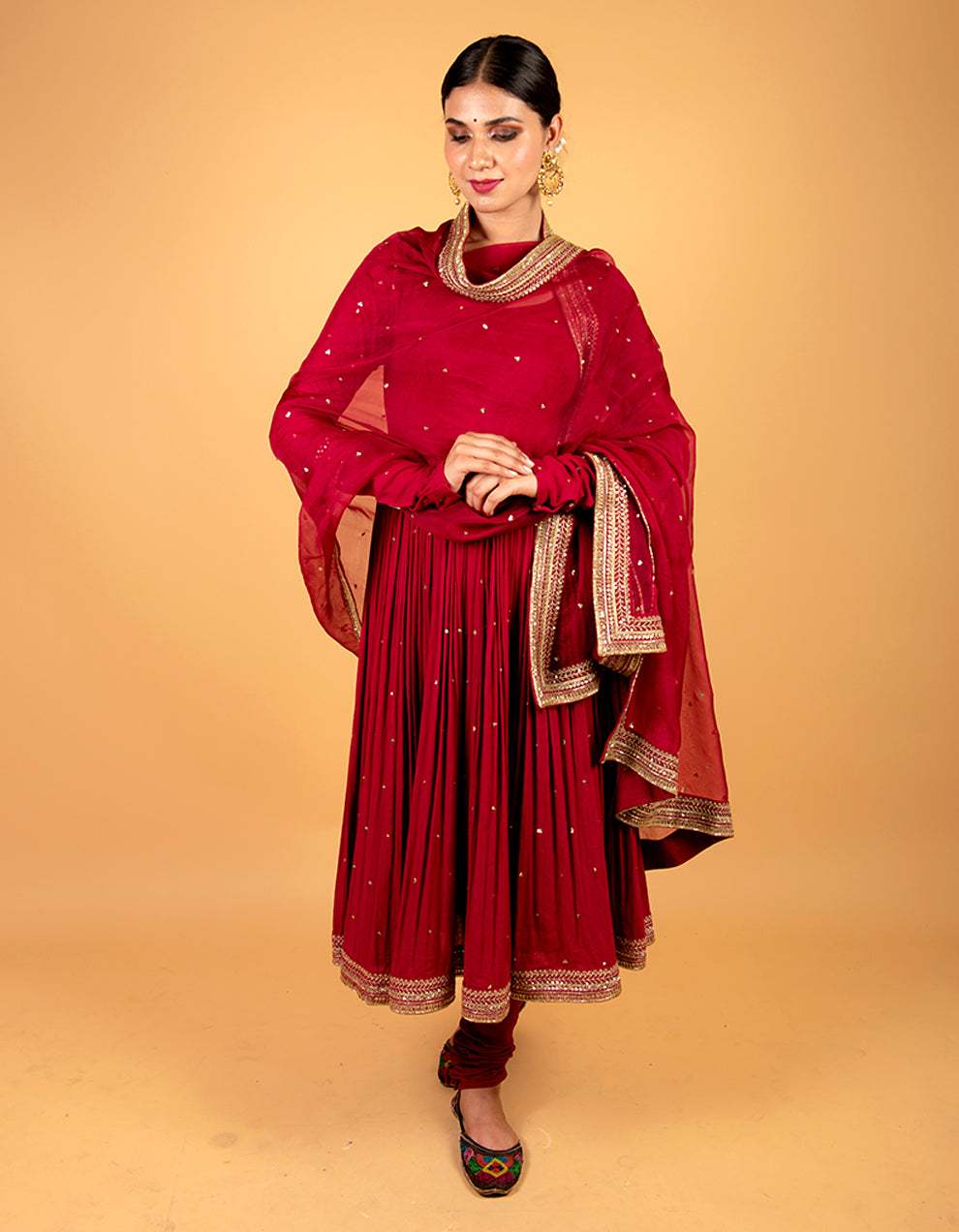
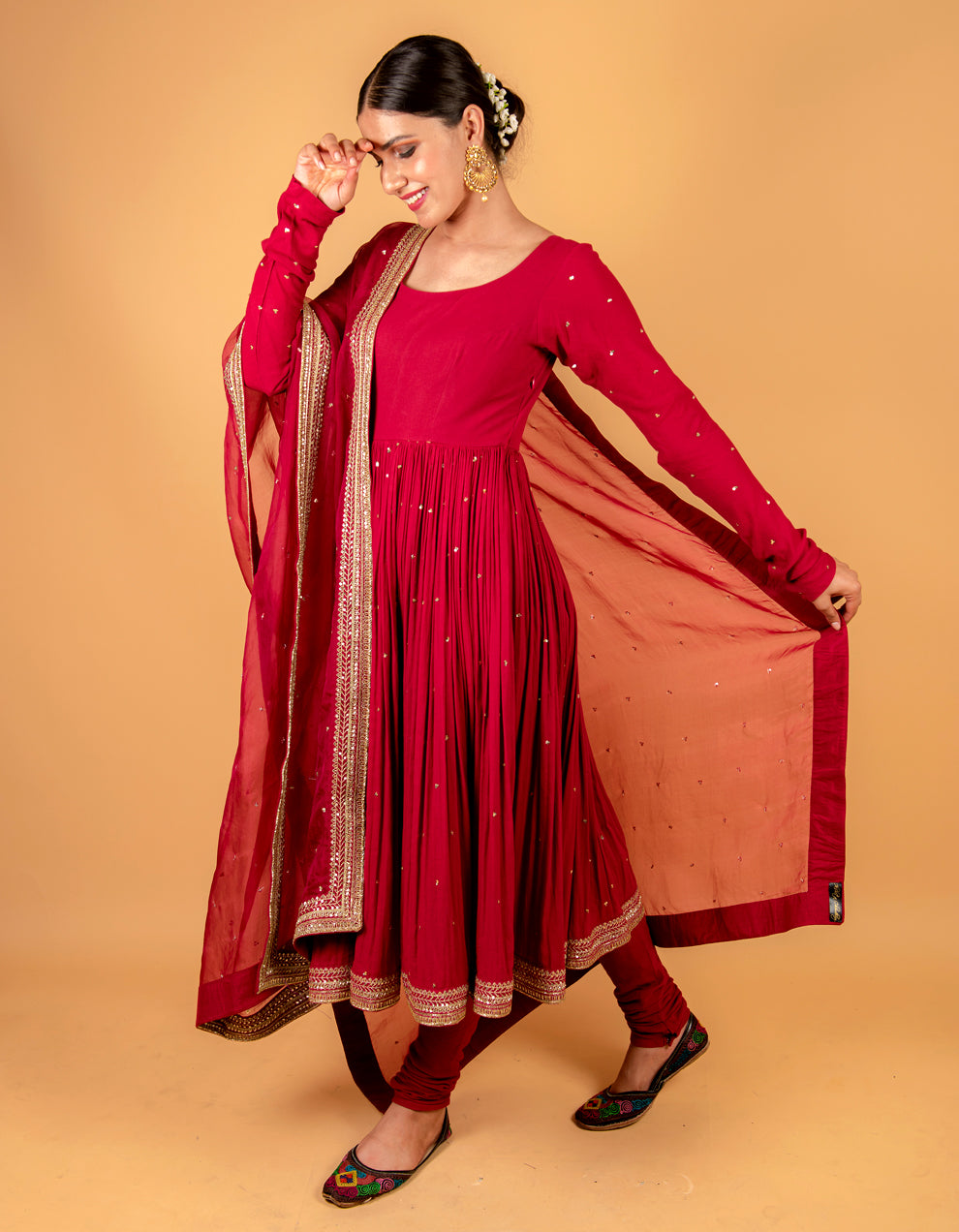
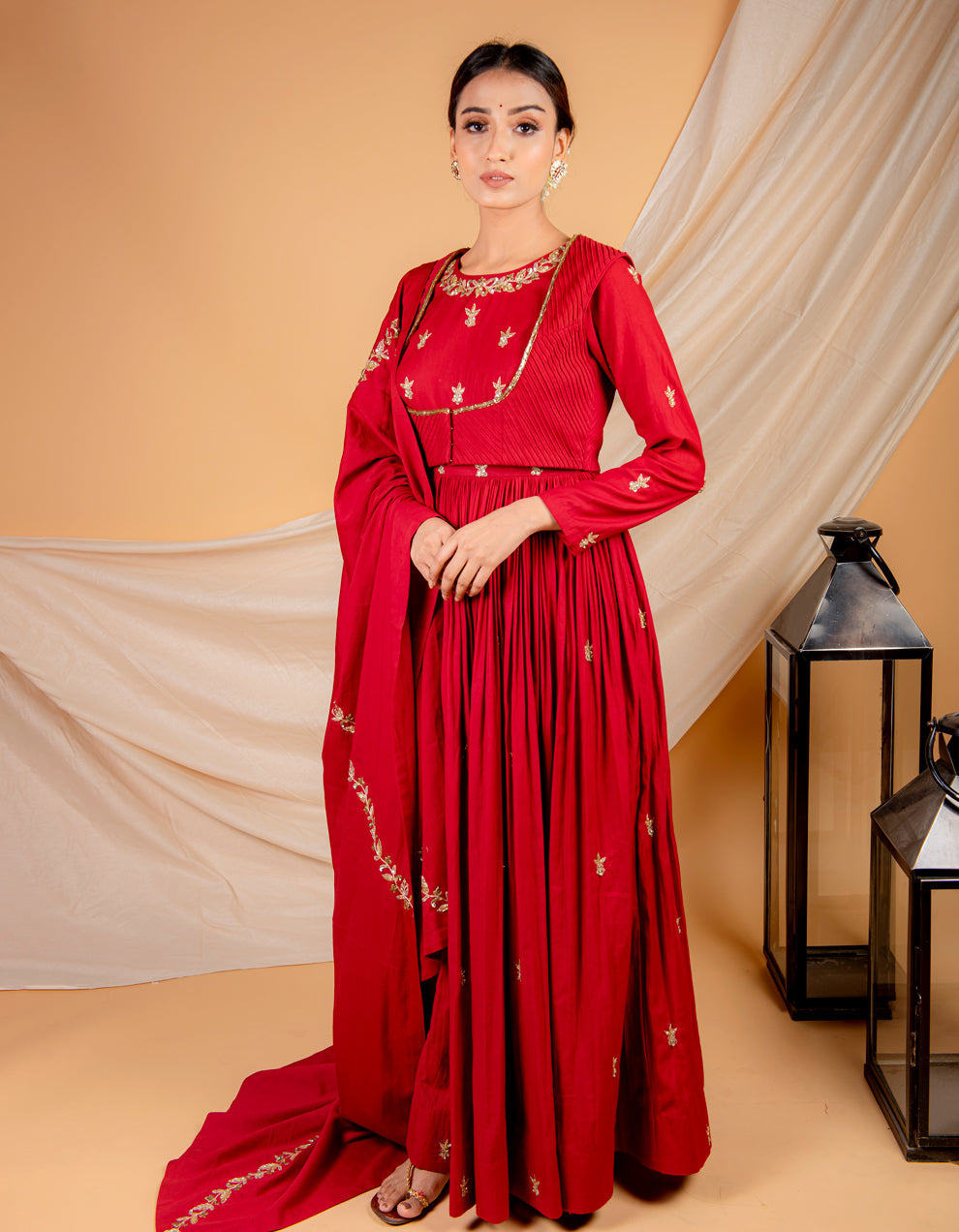
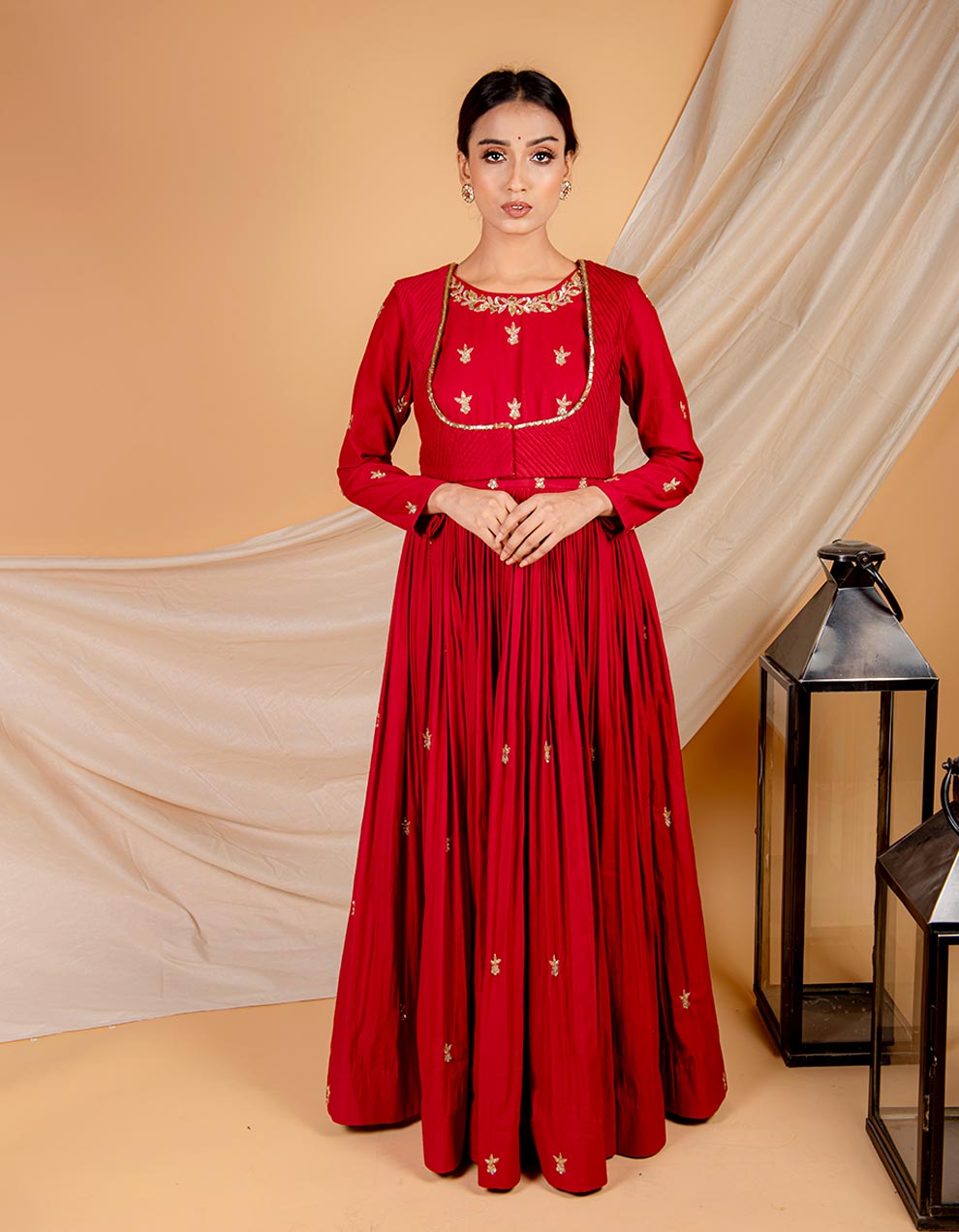
A red anarkali suit works when three things match: the shade of red, the fabric, and the flare. A true red suits cooler undertones best, maroon works with warmer and deeper tones, and rust pairs easiest with gold and antique jewelry, so start there before you start scrolling by embroidery style. This collection spans Chanderi, georgette, organza, matka silk, and cheese cotton, in flares from a moderate everyday kali count to full bridal volume, so you can match the piece to the fabric that actually suits your event and the climate you'll be wearing it in.
Below-Grid Content
What Is an Anarkali Suit?
A fitted bodice stitched to a flared skirt made of long panels called kalis - the more kalis, the fuller the flare. It comes as three pieces: kurta, churidar or pants, and dupatta. That visible waist seam is what separates an anarkali suit from an anarkali gown, which is cut in one continuous piece.
Which Shade - Red, Maroon, or Rust?
- Red: warm, high-contrast, most vivid in photos. Best on cooler or neutral undertones.
- Maroon: deeper, wine-toned, more forgiving under both daylight and indoor lighting. Suits warm undertones and deeper skin tones.
- Rust: earthy, terracotta-leaning. Easiest to pair with gold or oxidized silver jewelry.
Tip: check the shade in daylight, not indoor bulb light - indoor lighting pushes rust toward red and red toward pink.
Fabrics in This Collection
- Chanderi: sheer, lightweight, naturally sheeny handloom from Madhya Pradesh, GI-tagged since 2005. Breathable enough for daytime functions; needs careful storage as it creases easily.
- Georgette: soft, matte, flows rather than holds shape. The easiest fabric for first-time anarkali wearers.
- Organza: crisp and structured. Holds the flare's shape through a long evening; best for receptions and sangeets.
- Matka silk: textured raw silk with more body, ideal for suits with heavy zardozi or zari work.
- Cheese cotton: cotton-silk blend; lighter than pure silk, more structured than plain cotton. A practical daytime or warm-climate choice.
Which Occasion Is It Actually For?
Red is the color of the wedding ceremony itself, reception, sangeet, Karva Chauth, Diwali, and Navratri's designated red days, not haldi (traditionally yellow) or mehendi (traditionally green/pastel). If you're shopping for haldi or mehendi, a red anarkali will fight the theme rather than fit it - browse Haldi or Mehendi picks instead.
Finding Your Fit
- Petite: look for a yoke seam at or just below the bust (empire line) - it elongates the frame. Pair with a moderate rather than very full flare.
- Fuller figures: the fitted bodice-into-flare cut skims through the midsection better than a fitted lehenga or gown.
- Taller frames: can carry the fullest flares and longest hemlines without looking disproportionate.
Heavily embroidered pieces have a narrower alteration range - a seam let out on dense zardozi or gota patti can leave a visible gap. Check your measurements against the size chart (XS–6XL) before ordering rather than planning to alter later.
Styling It
Drape the dupatta open across both shoulders to show off back embroidery, or pin it on one shoulder if you'll be dancing. Pick one statement jewelry piece rather than stacking a heavy necklace, earrings, and maang tikka together - the suit's embroidery is usually enough on its own. Kundan and polki in gold pair naturally with red and rust; oxidized silver suits maroon.
Care
- Silk, Chanderi silk, organza: dry-clean only.
- Cotton, cheese cotton: hand-wash cold, dry in shade - direct sun fades red faster than most colors.
- Zari/metallic work: store wrapped in muslin (not plastic), on a padded hanger rather than folded, to prevent tarnishing and cracked threadwork.
FAQs
Can I wear red as a wedding guest, not just as the bride?
Yes, go a shade off the likely bridal tone (maroon or rust instead of true red) so you don't compete in photos.
Anarkali suit vs. anarkali gown - what's the actual difference?
A suit has a visible waist seam and three separate pieces; a gown is one continuous cut, usually worn with just a dupatta.
Is red anarkali fabric too warm for summer?
Depends on the fabric, not the color - Chanderi, georgette, and cheese cotton all breathe well; heavily lined organza or velvet will run warmer.
How many kalis should a bridal-weight anarkali have?
No fixed number, but everyday pieces typically run 8–12 panels; bridal or heavily formal ones often use 16+ for a fuller flare.