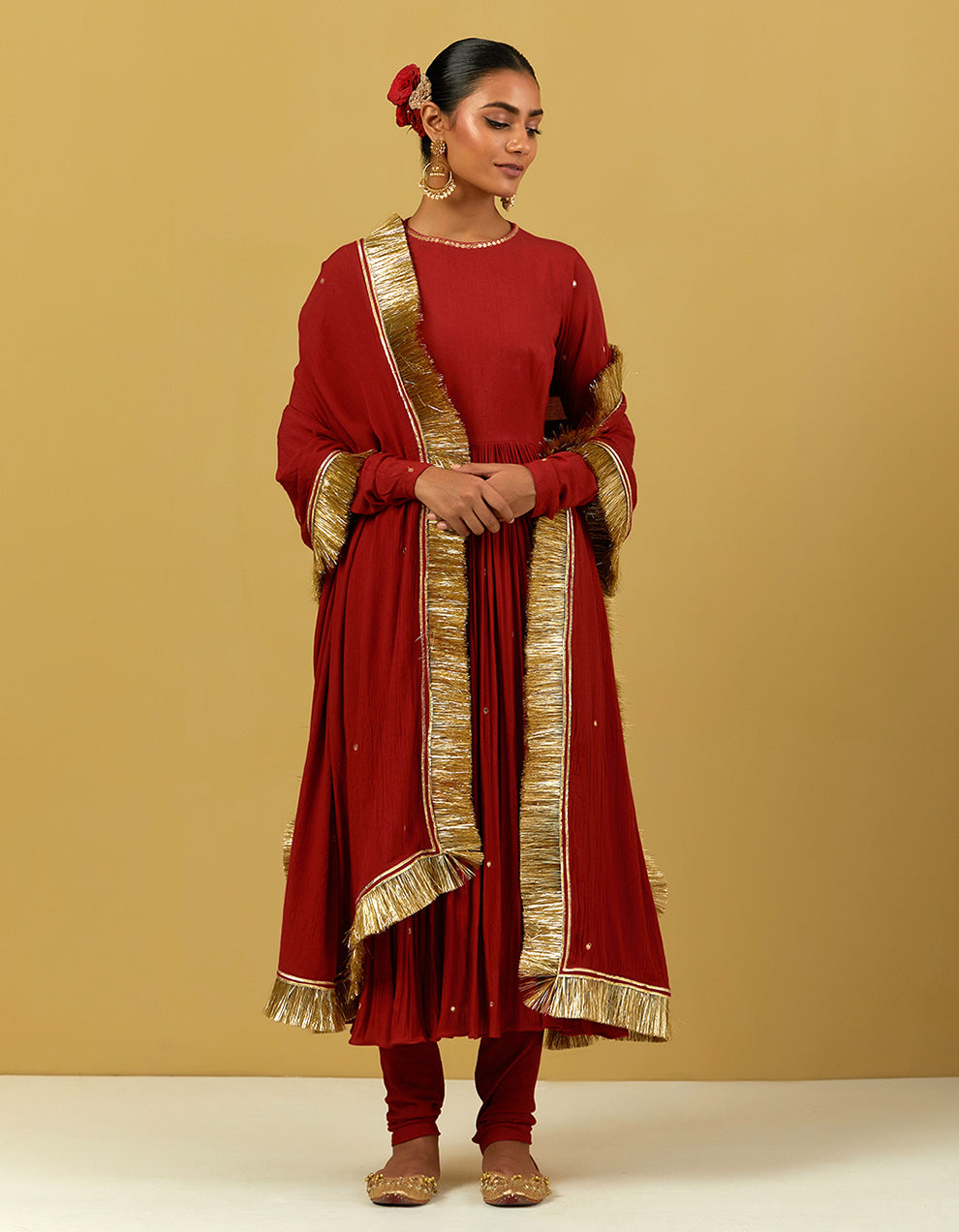
Karva Chauth Dresses for Women
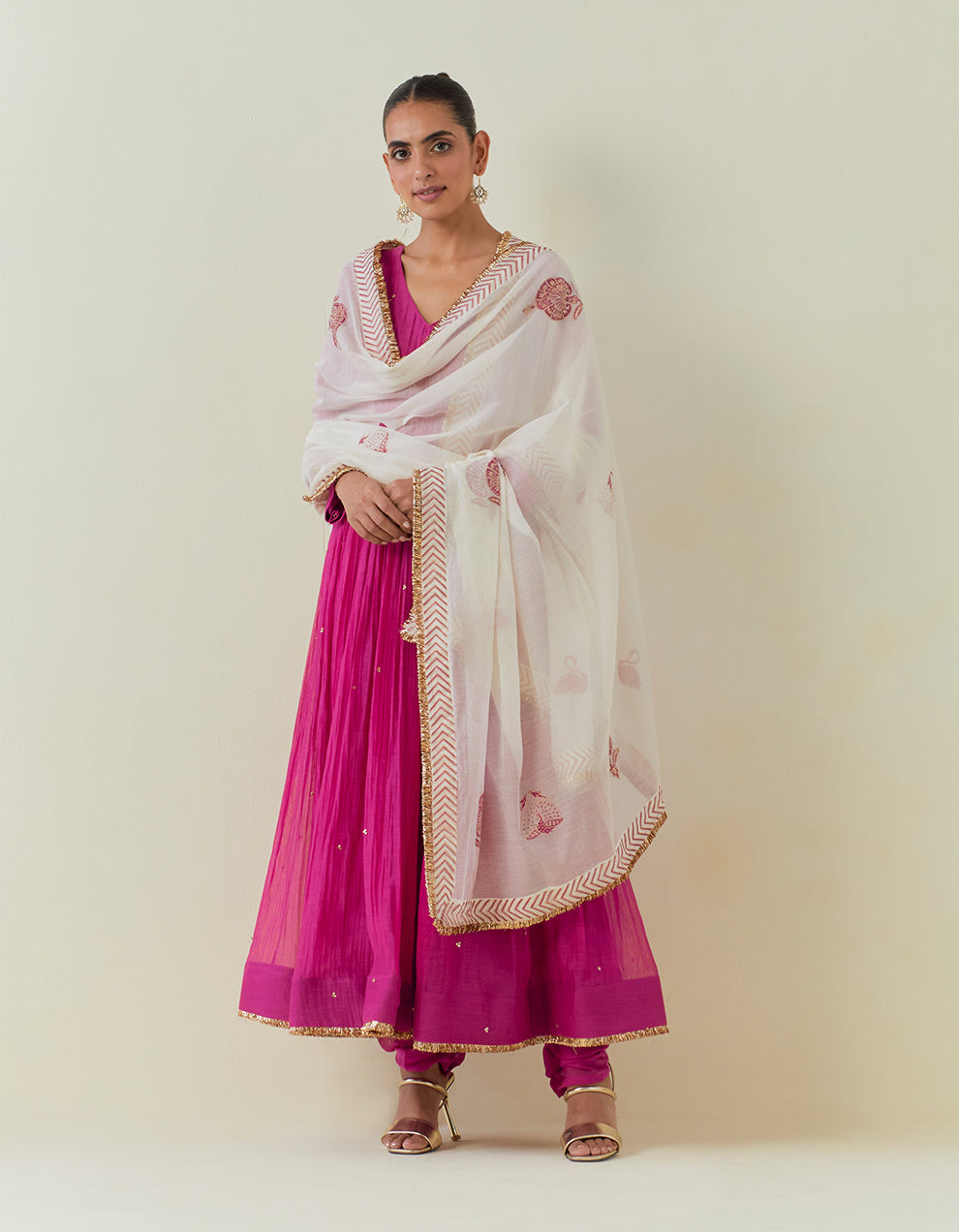
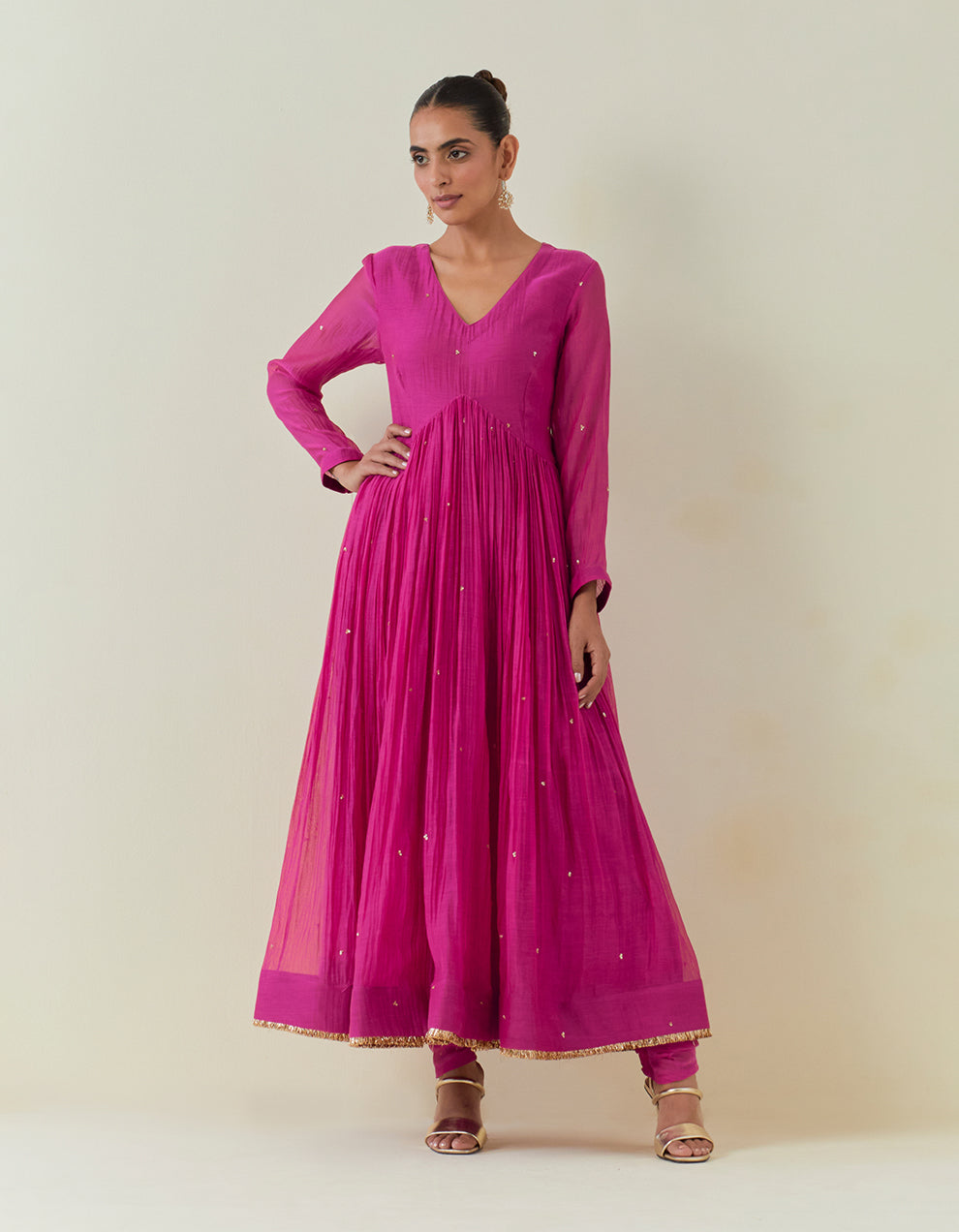
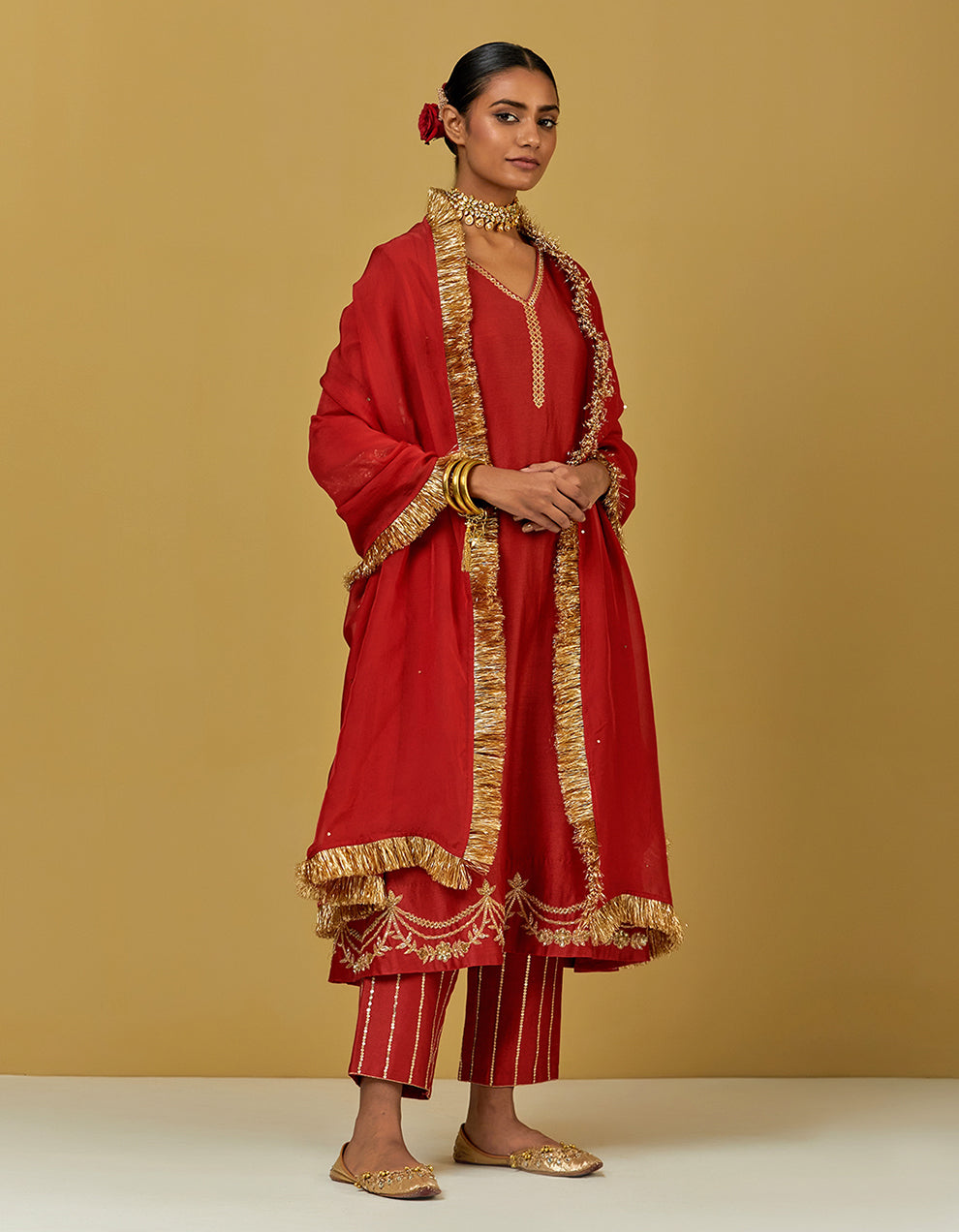
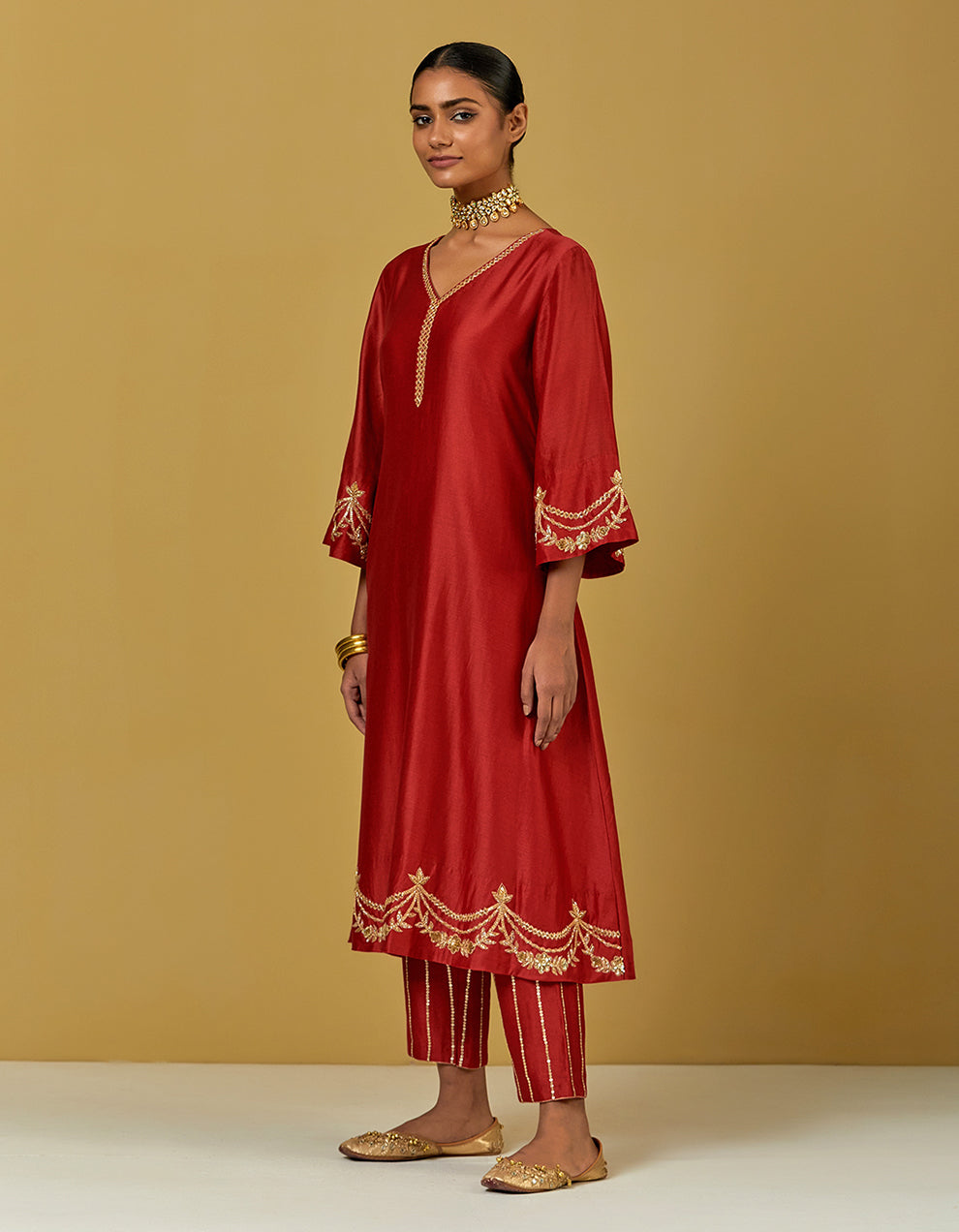
Red, maroon, magenta, pink and rust in chanderi silk, organza and cheese cotton anarkalis, suit sets, sarees and sharara sets — made for a day that runs from sunrise sargi to moonrise puja. Karva Chauth 2026 falls on Thursday, October 29, so shop with enough time for sizing and any last-minute alterations.
How to Choose Your Karva Chauth Outfit
Saree - the traditional pick for the moonrise puja, best if you're comfortable draping for several hours without a re-pin.
Anarkali suit set - the most forgiving option for a fasting day: flared from above the waist, easy to sit in for the puja thali, no re-draping needed between the mehendi corner and the mandap.
Sharara or gharara set - lets you sit cross-legged comfortably through the katha recitation, without pulling at the waist the way a fitted skirt can.
Indo-western set - the festive palette in a lighter, less traditional silhouette, if that fits how your family celebrates.
First Karva Chauth as a bride? Many families expect a saree or heavily worked anarkali for the occasion, worth confirming with your mother-in-law before you buy.
Fabric Guide for Late-October Weather
Late October in North India means warm afternoons cooling off fast after sunset - light but structured fabric holds up best over a full day of wear.
- Chanderi silk & organza - light enough for daytime, structured enough to carry embroidery through a long evening
- Georgette - drapes well, resists creasing through hours of sitting
- Cheese cotton - best if your day includes temple visits or gathering with neighbourhood women before the evening puja
- Skip heavy velvet or thick brocade - beautiful for Diwali, but it holds heat indoors and is the most common regret we hear from women who bought "festive heavy" instead of "festive light"
A Note on Colour
Red and maroon carry the solah shringar tradition, the same symbolism as sindoor and a red bindi. Magenta, pink and rust extend that palette without repeating your wedding red exactly. White and black are the two shades most families steer clear of for Karva Chauth, which is why you won't find them in this edit.
Warmer skin tones - rust and maroon sit best.
Cooler or fairer tones - magenta and true red read brighter without washing out.
Sizing & Fit
This edit runs XS to 6XL. Check the size chart against a well-fitting outfit you already own; sizing varies between labels, and it's worth getting right well before the 29th rather than altering it the week of.
Styling for the Full Day
- Push-up or three-quarter sleeves work better than tight full sleeves once mehendi is drying on your forearms
- A slightly looser waistband holds up better through a 14-hour fast than a fitted one
- Save bangles for after mehendi dries, and choose a sleeve that doesn't fight them at the wrist
- Carry a small potli or clutch instead of a full handbag; you won't need much once the puja begins
FAQs
Can I wear a sharara instead of a saree for my first Karva Chauth?
It's custom, not a rule; many families expect a saree for a bride's first year, but this varies by region and family. Confirm with your in-laws if unsure.
Can this outfit also work for Diwali, ten days later?
Yes, chanderi silk and organza anarkali sets in red or maroon transition well between both festivals.
How early should I order?
At least 3–4 weeks before October 29 for made-to-order pieces, especially if it's your first time ordering in a particular size from us.
What if red or maroon doesn't suit me?
Rust, deep pink and magenta carry the same tradition without being an exact colour match; pick by your skin tone rather than the exact shade.